Contact us: digitalwages@ilo.org

Beyond digital wages: Helping workers access the financial services they need in Cambodia
A transition from cash to digital wage payments can unlock more than a new way to receive wages. When implemented responsibly, digital wages can serve as a gateway to a range of financial services, helping workers build financial resilience and improve their overall wellbeing.
This is a key focus of the ILO’s Global Centre on Digital Wages for Decent Work. Building on progress in wage digitization, the Global Centre supports efforts to ensure workers can also benefit from a wider range of responsible financial services that contribute to their financial health.
To support this objective, the Global Centre together with Better Factories Cambodia (BFC) and partners, including the Financial Consumer Protection Centre (FCPC), Reimagining Industry to Support Equality (RISE) and Cambodian Women for Peace and Development (CWPD), organized a series of webinars and workshops throughout 2026 based on the publication Financial services for workers: A short guide for factory managers in Cambodia, jointly published by the ILO and RISE. The initiative aimed to raise awareness among factory managers and worker representatives of the important role employers can play in supporting workers’ financial inclusion and financial health.
Building awareness of financial consumer protection
The series began with an online seminar on financial consumer protection, held in partnership with the FCPC on 29 June 2026. The event brought together 164 participants, including 96 management representatives and 68 worker representatives from 55 factories, nearly half of whom were women.
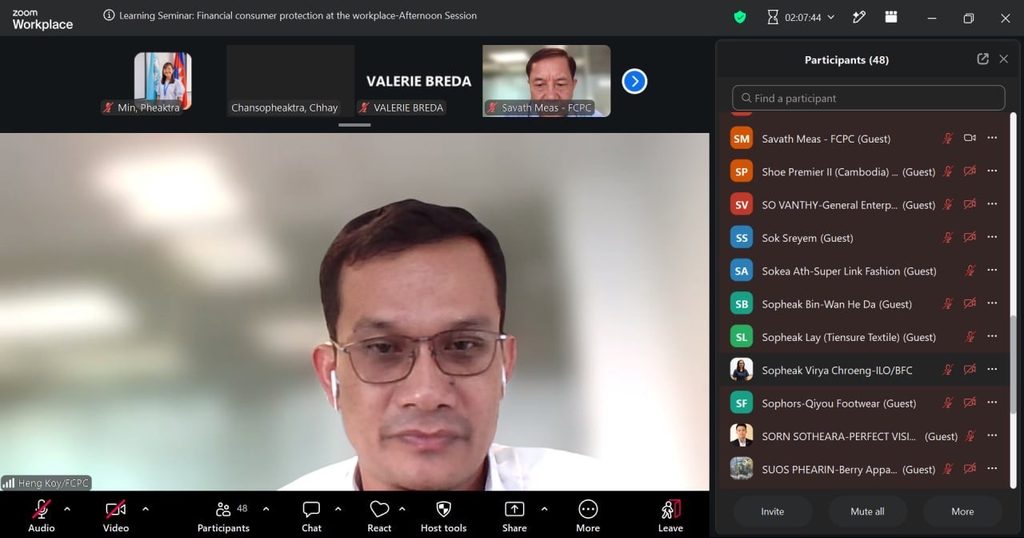
Participants explored the rights and obligations of financial consumers, learned about complaint and counselling mechanisms available through the FCPC, and discussed practical workplace scenarios related to financial services.
As Mr. Heng Koy, Executive Director of the FCPC, noted:
“As an independent, non-profit institution, the FCPC is dedicated to protecting financial consumers from fraud and unfair practices, ensuring neutral dispute resolution that builds trust, transparency, and fairness across Cambodia’s financial sector.”
Supporting workers to build savings
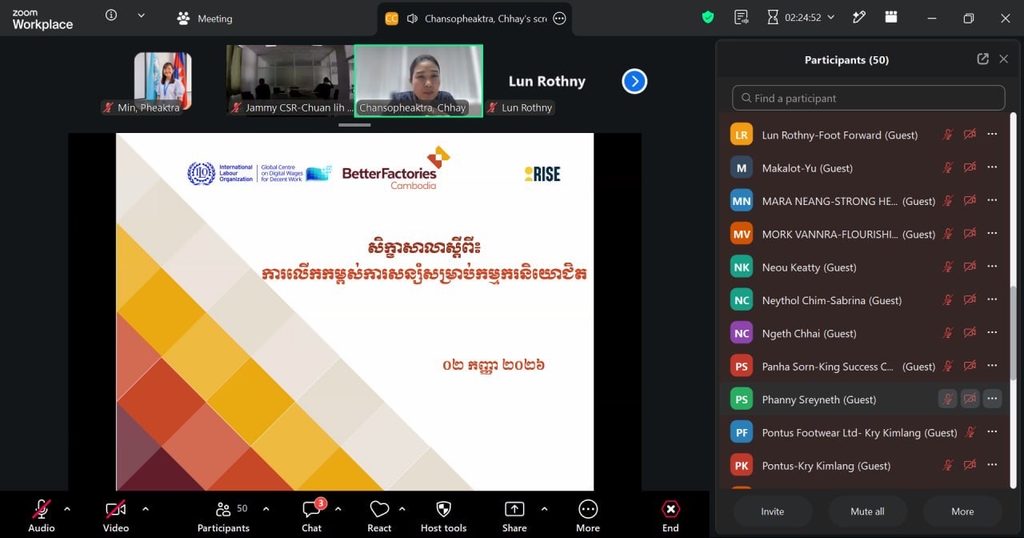
Responding to the strong interest in savings, the Global Centre and BFC, together with RISE and CWPD, organized a second virtual seminar on 2 September 2026 focused on promoting workers’ savings.
The webinar attracted 150 participants from 69 factories, including 124 management representatives and 26 worker representatives. Discussions focused on the importance of savings, different saving methods, the role employers can play in encouraging positive financial behaviours, and practical actions factories can take to support workers’ financial resilience.
A recurring theme throughout the discussions was that promoting savings requires more than information alone. Workers also need the skills and confidence to manage their wages effectively and make informed financial decisions in order to be able to save.
As one trainer from CWPD explained:
“Providing training on savings alone won’t be as effective if we don’t first train workers how to manage their wages before talking about saving habits.”
From learning to action
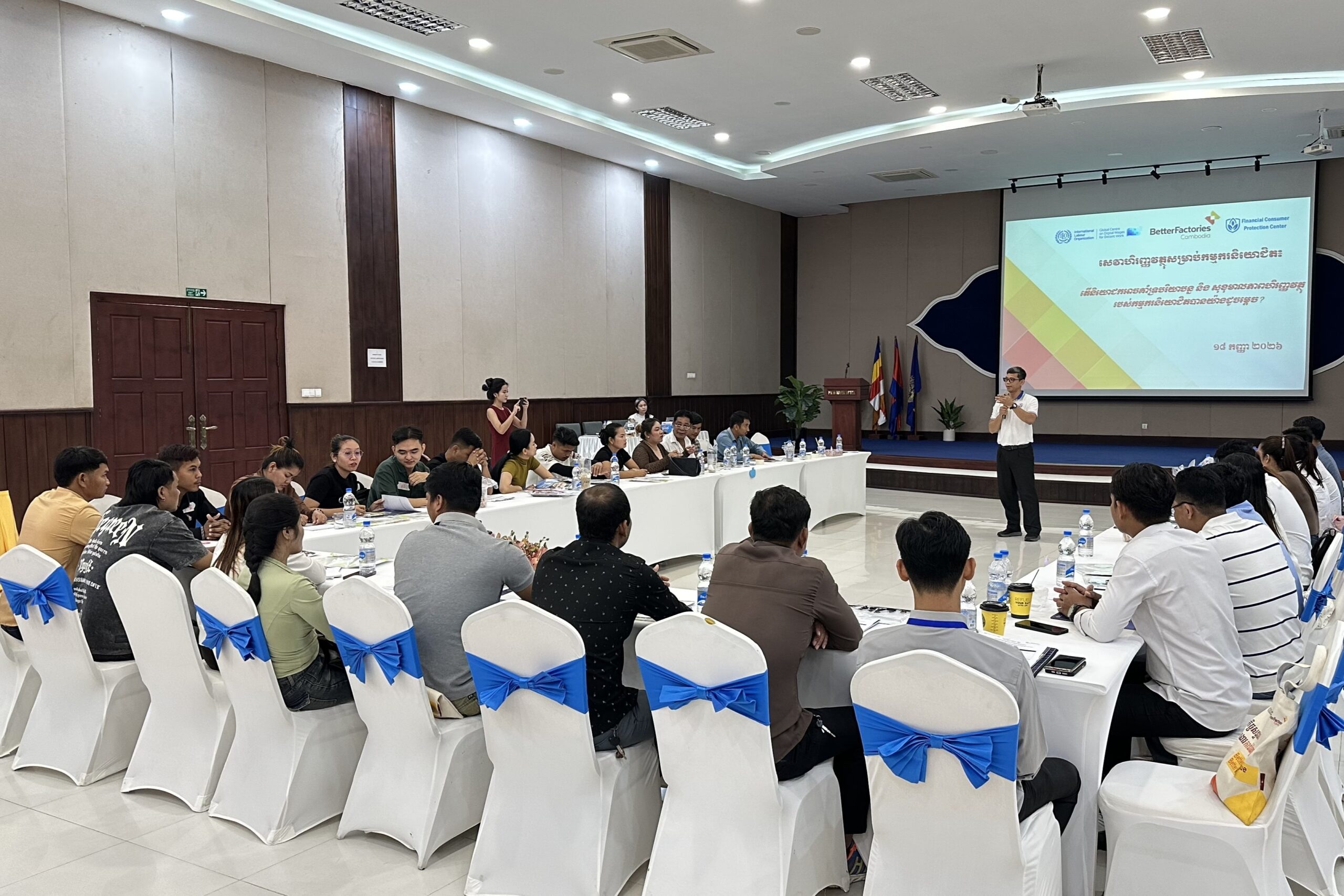
The series culminated in an in-person workshop in Kampong Speu Province on 18 September 2026, bringing together 32 participants, including 17 factory managers, 15 worker representatives and 10 women participants.
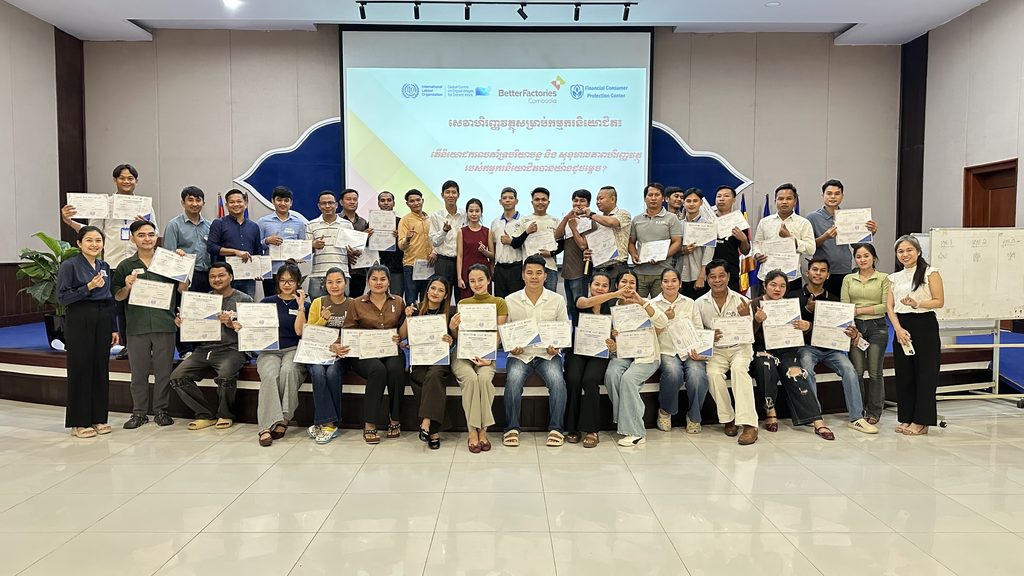
Using the resource Financial services for workers: A short guide for factory managers in Cambodia, participants explored key financial services and examined how employers can help workers access these services while understanding both the opportunities and risks they may present. Discussions covered savings, credit, social security benefits, financial consumer protection and cyber fraud, alongside demonstrations of a chatbot-based digital learning tool for financial education.
Participants concluded the workshop by developing action plans tailored to their factories. These plans identified concrete steps to increase awareness of financial services, strengthen financial education and connect workers with reliable sources of information.
One participating compliance officer reflected this commitment in their action plan:
“After this training, management will disseminate key information on financial services and promote the chatbot learning tool among workers.”
Looking ahead
Across the three events, more than 340 factory managers and worker representatives from garment factories across Cambodia engaged in discussions on how the workplace can support better financial outcomes for workers.
The experience demonstrates that employers have an important role to play in advancing financial inclusion. As trusted points of contact, they can help workers navigate an increasingly complex financial landscape, access appropriate services, and make informed financial decisions.
Building on the guide and the momentum generated through this learning series, the ILO’s Global Centre on Digital Wages for Decent Work, Better Factories Cambodia and partners will continue working with factories, workers and financial service providers to promote financial inclusion and strengthen financial health in Cambodia, ensuring that the benefits of digital wage payments translate into meaningful improvements in workers’ lives.