Contact us: digitalwages@ilo.org

Cambodia accelerates progress on digital wages and financial inclusion
From trainings on responsible digital wage payments to the launch of a financial literacy programme for banks and microfinance institutions, and a practical guide for garment factory managers, Cambodia is building the foundations for a more inclusive digital economy, with the ILO and a broad coalition of partners at the centre of it all.
Phnom Penh, Cambodia (ILO News) – Over the past few weeks, Cambodia has seen a series of important initiatives at the intersection of worker empowerment, responsible finance and digital inclusion. From garment factories to banking and microfinance institutions, stakeholders across the public and private sectors have been moving in the same direction – building a more financially resilient future for Cambodian male and female workers and businesses.
At the heart of these efforts is the ILO Global Centre on Digital Wages for Decent Work, which continues to support Cambodia’s transition toward responsible digital wage payments and broader financial inclusion. What makes this moment particularly significant is not just the scope of individual initiatives, but the level of collaboration behind them. Employers’ organisations, financial institutions, industry associations, consumer protection bodies and international organisations are increasingly aligned around a shared goal: ensuring that digital financial services work for both workers and businesses alike.
Advancing responsible digital wage payments
On 12 and 13 May 2026, a training of trainers on the responsible digitization of wage payments for SMEs, organised by the ILO in partnership with the Cambodian Federation of Employers and Business Associations (CAMFEBA), brought together representatives from business associations, government institutions and the financial sector with one objective: scaling responsible digital wage payment systems across the country.
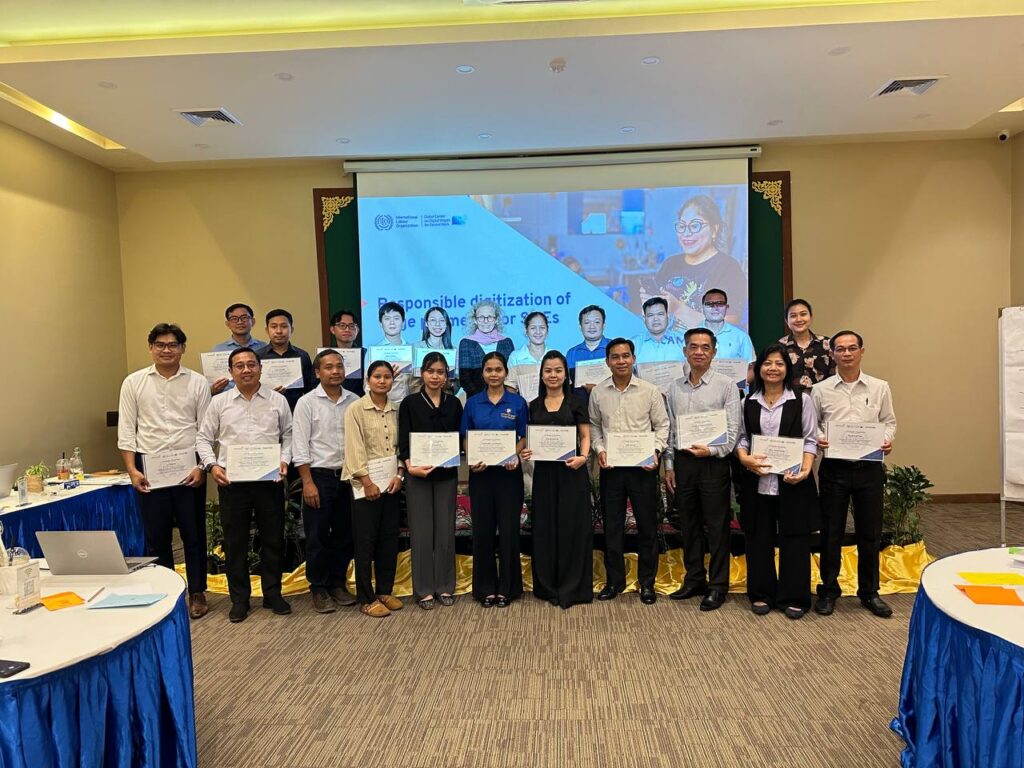
The initiative is part of the ILO’s broader work through its Global Centre on Digital Wages for Decent Work. Beyond improving operational efficiency for businesses, responsible digital wage payments can help workers access formal financial services more safely and strengthen their financial security.
The topic also featured prominently at an event organised by CAMFEBA on the sidelines of the ASEAN Confederation of Employers’ 50th Annual General Meeting on 8 May, where participants explored how digital wage payments can contribute to both business competitiveness and worker’s empowerment as adoption grows across the ASEAN region.
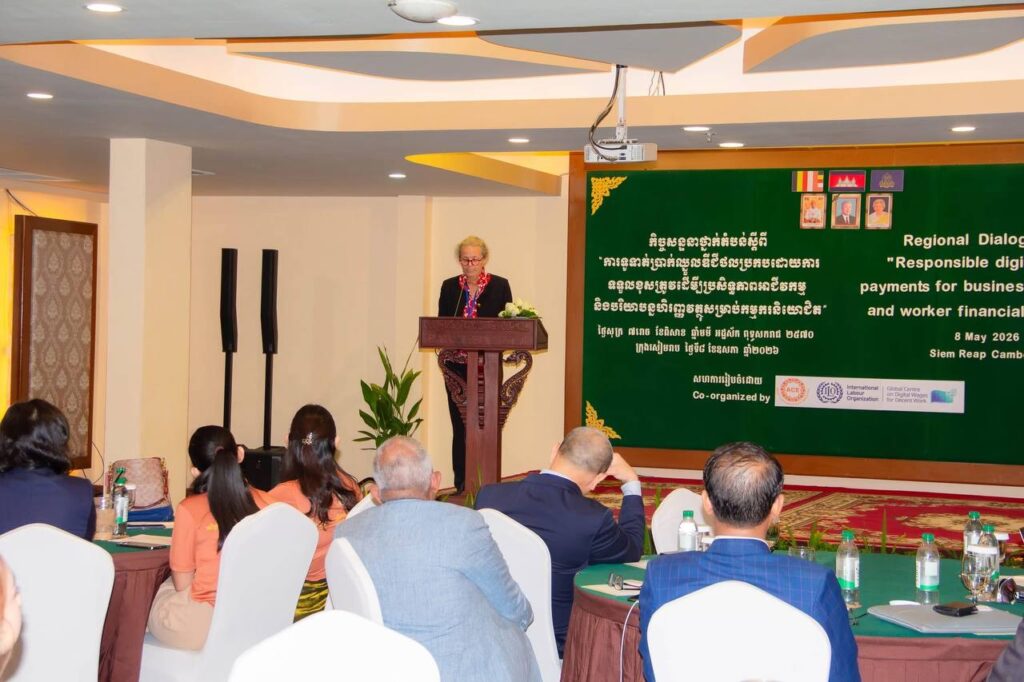
Sok Lor, Representative of the Association of Cambodian Employers (ACE), captured the importance of this shift:
“Responsible digital wage payments can enhance regional competitiveness by improving transparency and efficiency across ASEAN supply chains, while promoting greater economic inclusion, particularly for women workers.”
Supporting factory managers and garment workers
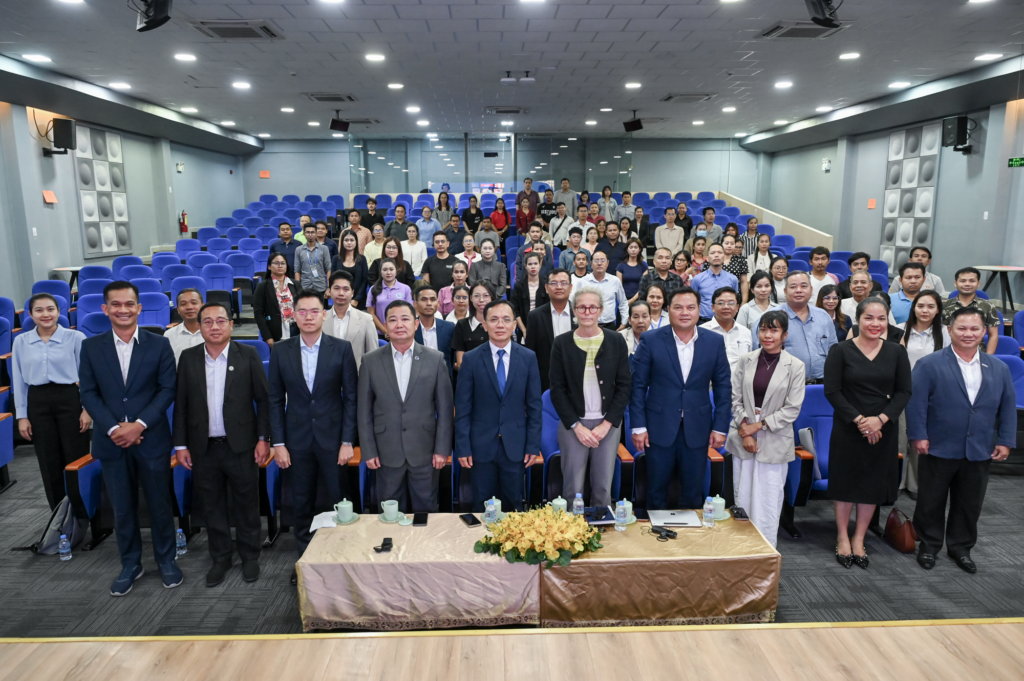
On 15 May 2026, the ILO, Better Factories Cambodia programme, Reimagining Industry to Support Equality (RISE), the Textile, Apparel, Footwear & Travel Goods Association in Cambodia (TAFTAC) and the newly established Cambodia Financial Consumer Protection Center (FCPC) jointly launched the publication “Financial services for workers: A short guide for factory managers in Cambodia”, available in Chinese, English and Khmer.
As highlighted by Valerie Breda, Technical Expert at the ILO Global Centre on Digital Wages for Decent Work:
“Factory managers are increasingly approached by financial service providers seeking to offer services to newly banked workers. The emergence of innovative financial services presents a unique opportunity for factories to take a more active role in facilitating access to formal financial services. Doing so can contribute to improved financial well-being for workers and in turn, enhanced productivity and performance in the workplace.”
Designed to help factory managers support workers in accessing, understanding and responsibly using formal financial services, such as savings, credit, insurance, the guide comes at a critical moment as digital wage payments become increasingly widespread in Cambodia’s garment sector. The launch drew more than 100 participants from the garment and financial sectors, a clear signal of the growing momentum behind worker financial inclusion.
Building financial literacy for a digital economy
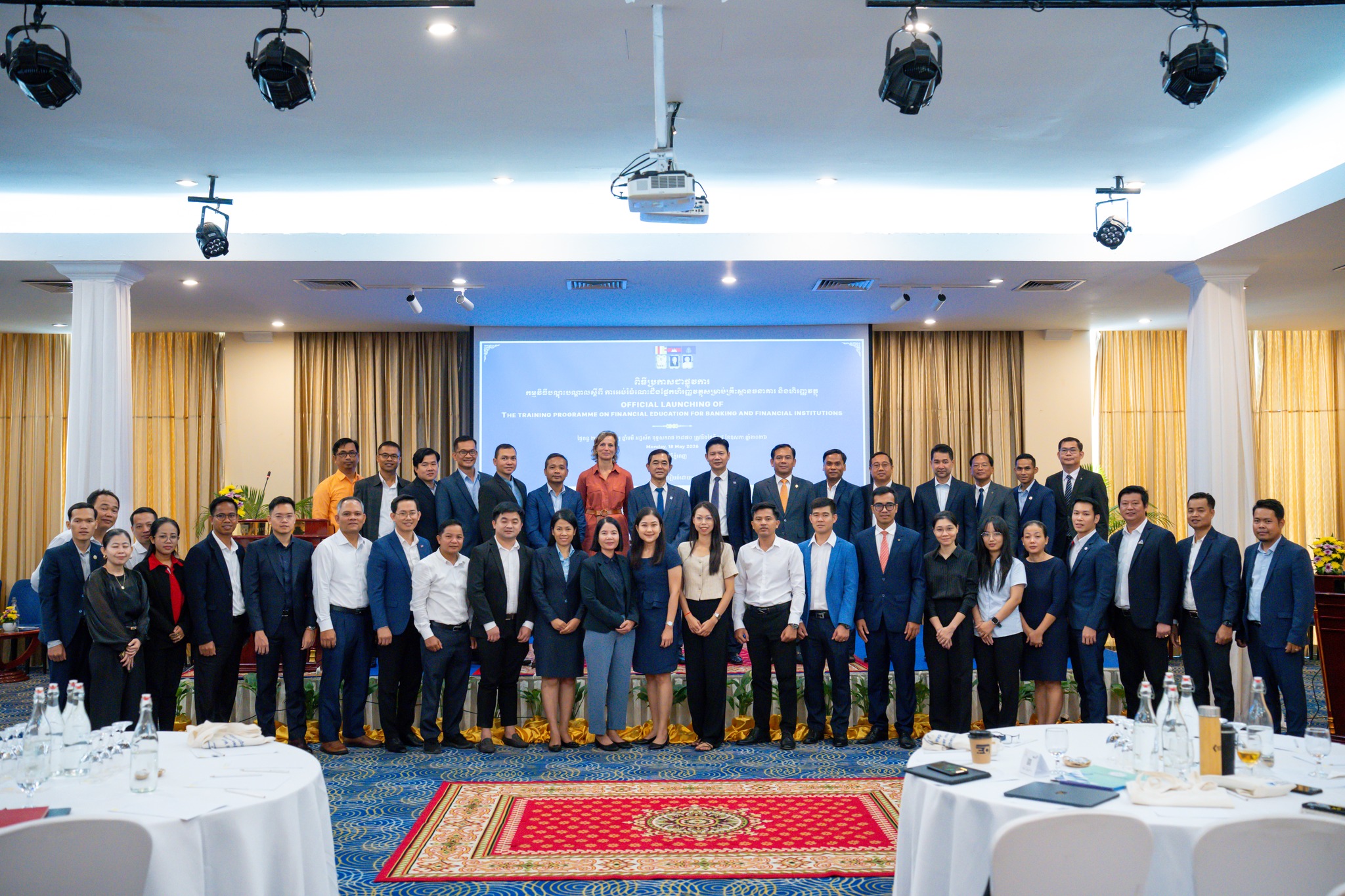
On 18 May 2026, the Association of Banks in Cambodia (ABC), the Cambodia Microfinance Association (CMA) and the ILO officially launched the “Financial education for banking and financial institutions” training programme in Phnom Penh. This launch marked the commencement of a training of trainers on financial education, held from 18 to 22 May 2026.
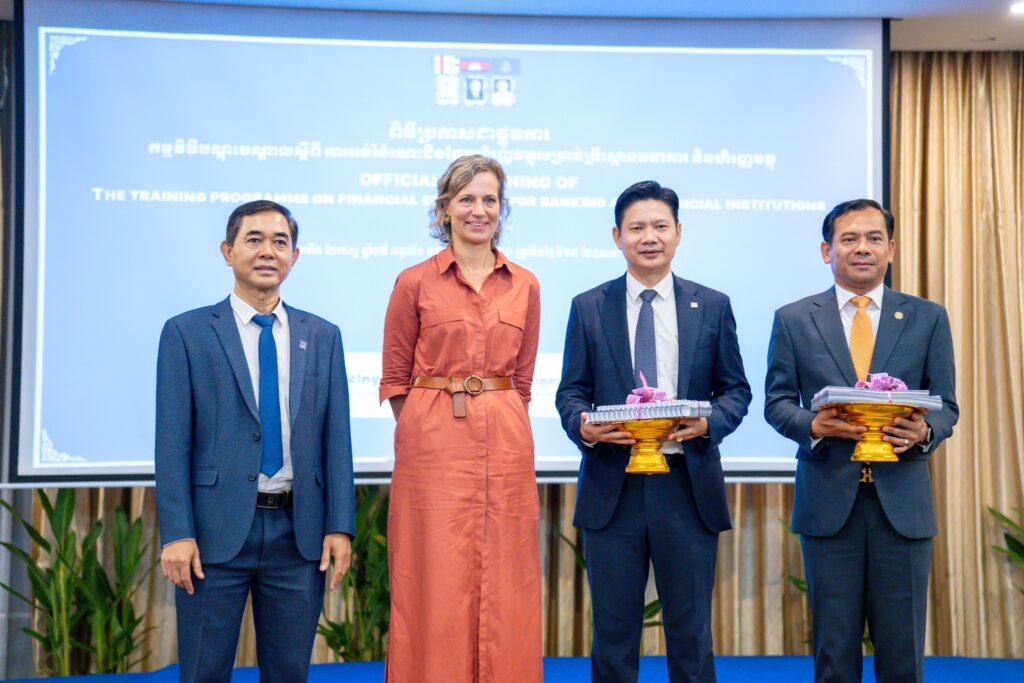
The event brought together around 60 participants from banking and financial institutions, trainees, media representatives and sector stakeholders. The initiative, supported by the ILO’s Social Finance Programme, aims to build a nationwide network of certified trainers who will replicate financial education within their own organisations and communities, helping workers, entrepreneurs and citizens navigate Cambodia’s increasingly digital financial landscape.
As underscored Froukje Boele, Programme Manager at Better Factories Cambodia:
“Financial capability supports efforts to access and sustain better work opportunities, manage self-employment or small businesses and navigate transitions in life and work. It can be a stepping stone towards decent work. Being financially informed allows people to better negotiate their rights, protect themselves against exploitation and make choices that support their long-term well-being.”
Rath Sophoan, Chairman of the Association of Banks in Cambodia, highlighted the practical value of the initiative:
“This programme is going to be quite impactful because we will be training our professional bankers – who are already very experienced in providing banking services – on financial literacy, so that they can in turn train workers, some of whom are already our customers. The overall content of the training is very relevant and practical, and people can easily relate to it.”
Across all interventions, one message was clear: sustainable growth in the financial sector cannot be achieved through access alone. Financial literacy, responsible finance practices and strong financial consumer protection are equally essential.
Tun Sophorn, ILO National Coordinator, captured the significance of the moment:
“The launch of this programme represents a shared commitment to institutionalize financial education within the financial sector and strengthen the capacity of service providers to deliver responsible and client-oriented support. It is a shift from pilot initiatives to a more structured, scalable and sustainable system that is anchored in strong partnerships.”
A shared vision for inclusive digital finance
Taken together, these initiatives tell a clear story. Cambodia is not simply digitizing wages: it is building the foundations for a more inclusive financial ecosystem, one where workers are paid digitally and equipped with the knowledge, protection and financial tools needed to fully participate in the formal economy.
As digital wage adoption continues to expand, Cambodia’s experience shows what becomes possible when responsible digitization, financial literacy and cross-sector collaboration work in concert and offers a model worth watching for the rest of the region.