Contact us: digitalwages@ilo.org

Fintechs explore new avenues for responsible workplace financial services with support from the ILO
GENEVA, Switzerland (ILO News) – Rising living costs, low wages, uneven social protection coverage and limited access to affordable financial services often make it difficult not only for workers to absorb unexpected expenses, but also to manage day-to-day bills and build resilience through savings and other assets.
Options to manage financial strain are usually scarce: few have access to formal financial services; some rely on family, friends, or wage advances from employers; far too many have no option but to turn to informal lenders with high risks and costs.
These pressures do not only affect workers and their families. Beyond the household, workers’ financial struggles are also a familiar challenge for employers.
Whether in a small enterprise constantly juggling cash flow to respond to wage advance requests or in a larger company facing reduced productivity as work hours are spent worrying about bills—or increased absenteeism as workers avoid showing up to evade loan sharks collecting debts—the impact on the workplace is real.
Many of the drivers of workers’ financial vulnerability reflect broader labour market trends that require coordinated policy responses. However, access to tailored and affordable financial services can help address some of the most pressing challenges, while strengthening resilience and supporting longer-term financial goals.
Fintechs as drivers of workplace-based financial services
As more businesses digitize payroll processes and wages are paid through banks and mobile money operators, new opportunities are emerging for workplace-based solutions with the potential to improve workers’ financial health.
Services such as earned wage access, workplace savings, debt advice, digital budgeting tools and financial literacy programmes form a broad portfolio designed to leverage payroll data and workplace practices to better serve workers’ needs and strengthen financial management capabilities.
At the centre of these services are fintechs whose core model is built around partnerships with employers. They typically operate in a B2B2C model, where services for workers are facilitated through the workplace.
The value proposition for employers is compelling, as highlighted by Mads Werner, CEO of Ekko, a fintech operating in Vietnam:
“Financial stress is one of the most overlooked drivers of productivity loss, yet most companies still treat it as a personal issue instead of a workplace one. Employers now have an opportunity to provide an additional layer of financial security by giving employees more control over their earned income, driving loyalty and retention.”
Many of these fintechs are themselves payroll providers, embedding tailored financial services into their offering for employers and workers. Others are digital platforms that connect to payroll data to deliver solutions focused on workforce financial wellbeing.
Earned wage access (EWA)—a service that allows workers to access the portion of wages already earned before payday—is one of the key solutions in these fintech portfolios and often the entry point into a broader set of services.
Already well established in the United States and the United Kingdom, EWA services are expanding across Africa, Asia, Europe and Latin America, gaining traction among employers across multiple sectors and workers at different income levels by addressing common challenges arising from mismatches between workers’ income and expense cycles.
As Dr. Emmanuel Okeleji, CEO and Co-founder of SeamlessHR, a leading HR and payroll technology company in Nigeria, explains:
“We are redefining what work feels like for millions of working Africans. For too long, employees have had to wait until payday to solve urgent financial needs, even though they have already earned that income. This gap creates unnecessary stress and limits financial stability. Earned wage access closes that gap. It is a shift towards a more equitable and responsive financial system for the African workforce.”
Similarly, Steven Furman, CEO and Founder of Paytime, highlights the growing momentum of EWA adoption in Australia:
“Many workers are struggling with the timing mismatch between when expenses occur and when wages are paid. When offered responsibly, EWA helps solve that gap. As cost of living pressures continue, we believe EWA will become an increasingly important part of workplace financial wellbeing strategies. It is a rapidly evolving market, and a major challenge is ensuring positive impact as EWA services are implemented across different markets and workplace settings and reach a diverse range of workers and enterprises”.
A community of fintechs committed to financial health and decent work
The ILO Global Centre on Digital Wages for Decent Work engages with fintechs operating in the workplace finance space, exploring how their partnerships with employers can help drive positive impact on workers’ financial health.
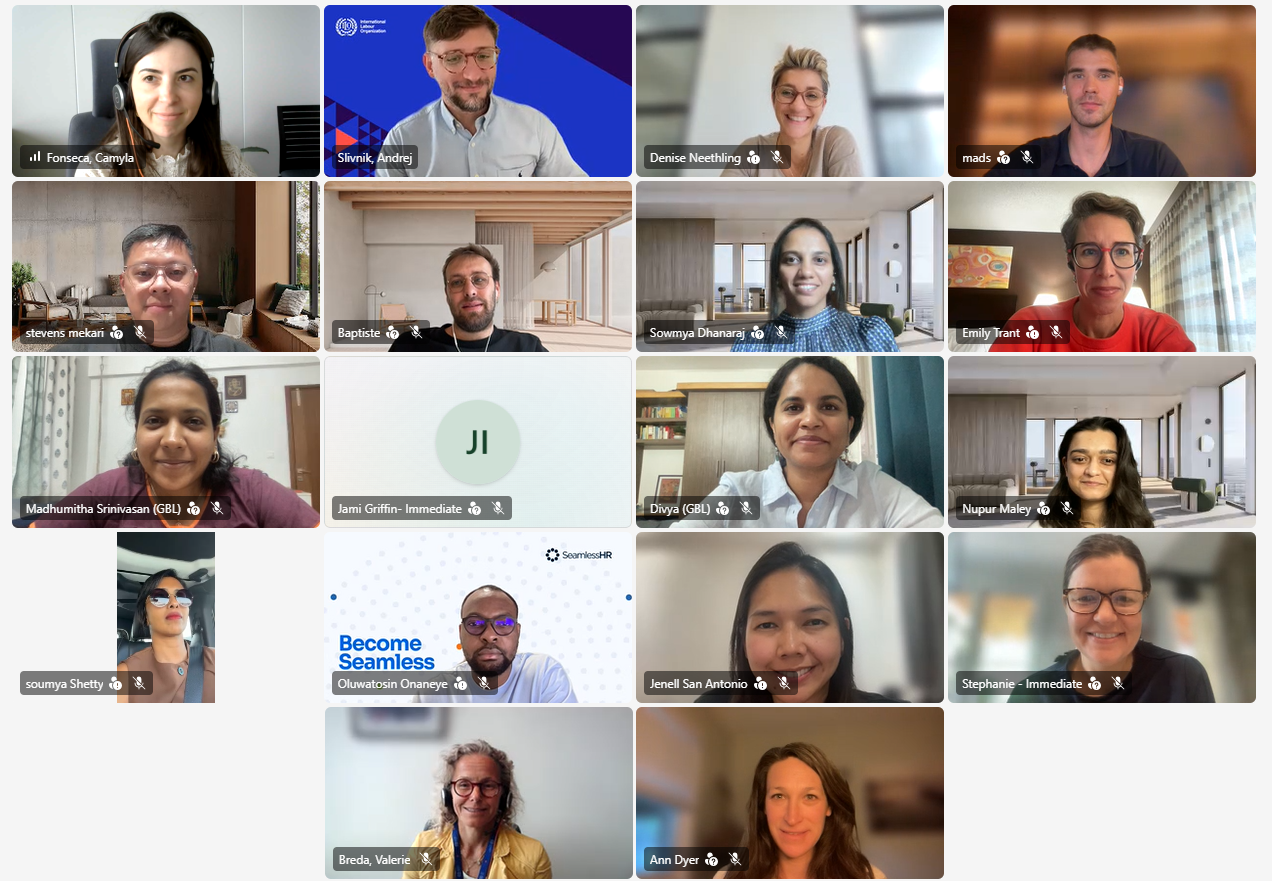
Following the publication of a global report on EWA and a series of surveys conducted in collaboration with 60 Decibels, the Global Centre has convened a group of 18 fintechs, collectively serving nine million workers across 9,000 enterprises in 35 countries.
The group has come together in a Community of Practice focused on identifying and streamlining best practices that support the responsible delivery of EWA services and maximize positive impact for both enterprises and workers.
As highlighted by Emily Trant, Chief Impact Officer at Stream, an UK-based financial wellbeing platform:
“The EWA models having the greatest impact are those that go beyond access to wages by giving workers full visibility and control over their finances. That’s what moves EWA from a helpful product to a genuine catalyst for financial resilience.”
Emily continues:
“The workplace is one of the most powerful channels we have for delivering these tools, and the Community of Practice is a real opportunity to ensure this is scaled responsibly. We look forward to bringing the learnings from our impact measurement work, because the only honest way to know if you’re genuinely improving people’s financial lives is to keep measuring, and to stay open to what you find.“
The group’s first objective is to develop a Global EWA Good Practices Guide that can serve as a reference for providers, employers and policymakers worldwide. Scheduled for launch in the second half of 2026, the guide is expected to steer providers towards practices that deliver the greatest benefits to workers and employers, while helping shape this emerging market.
Beyond this initial phase, member fintechs are expected to continue engaging through the community, with a view to developing and promoting workplace-based solutions that enhance workers’ financial health and support broader decent work outcomes.
As Alex Kim, Co-Founder and President at Paywatch, a fintech operating in Southeast Asia, noted:
“Earned wage access is evolving rapidly, and no single provider can shape its future alone. Through this Community of Practice, we have the chance to connect insights across regions, align on what responsible EWA truly looks like and ensure workers everywhere benefit from solutions built on shared standards of trust and impact.”
Craig Churchill, Head of the ILO Social Finance Unit, highlighted the significance of this collaboration for the ILO:
“For the ILO, working with EWA service providers has opened a window to better understand the financial health challenges faced by workers and their effects on the workplace. It has also highlighted the potential of partnerships between employers and financial service providers in designing solutions to these challenges. The Community serves as a starting point for broader collaboration and experimentation, with learnings feeding into the ILO’s broader agenda on workers’ financial health.”