Contact us: digitalwages@ilo.org

From cash to digital: Social partners drive wage digitization for SMEs in Indonesia
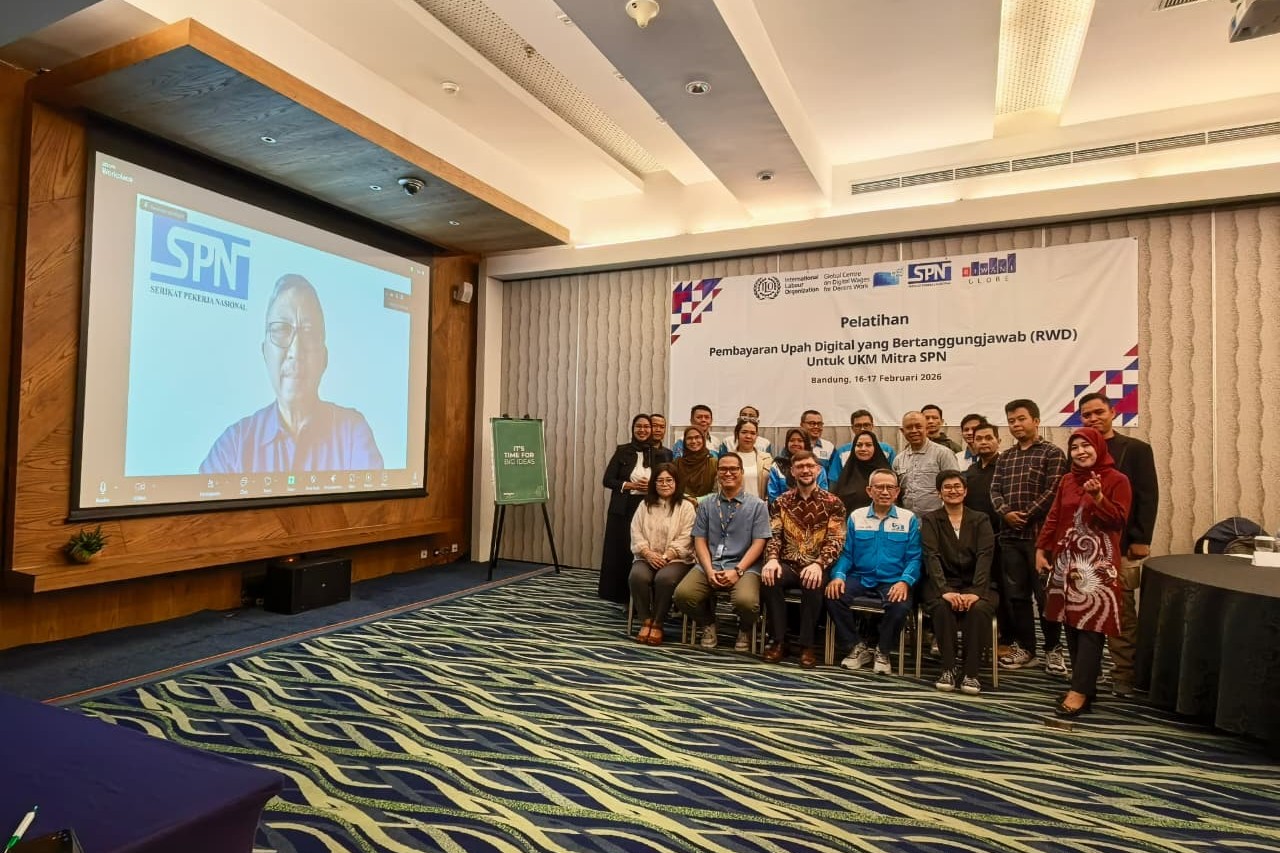
BANDUNG and SURABAYA, Indonesia (ILO News) – For many small businesses in Indonesia, paying wages in cash is still the norm — but that is beginning to change. Over the past year, the ILO Global Centre on Digital Wages for Decent Work has been building the capacities of multiple government organizations and social partners in Indonesia to promote wage payments into bank or mobile money accounts in small and medium-sized enterprises (SMEs), responsibly and sustainably.
At the heart of this effort is the Responsible Wage Digitization training programme — a certification-based initiative that equips partner organizations with the knowledge, skills and tools to effectively support SMEs in adopting digital wages. The programme covers critical issues that should be observed by SMEs in the transition, including how to set up a payroll system and how to engage workers, and provides companies with an actionable roadmap.
The programme follows a certification-based approach: trainers from partner organizations participate in Trainings of Trainers (ToTs) — organized by the ILO Global Centre in partnership with the Indonesian Employers Association (APINDO) and local consultancy RIWANI Globe — and subsequently deliver the training independently to SMEs within their networks as part of their certification requirements.
The results so far are encouraging. Nine trainers from five partner organisations, including APINDO, the Integrated Service Centre for Cooperatives and Micro, Small and Medium Enterprises (PLUT-KUMKM), the Indonesian Furniture Industry and Handicrafts Association (ASMINDO), Sahabat Ayu (Women Entrepreneur Community) and the rural bank BPR Nusamba Cepiring, have collectively delivered 22 training activities, reaching 281 enterprises across Indonesia and completing their certification requirements.
In February 2026, the ILO Global Centre and RIWANI Globe organised two certification trainings in Bandung and Surabaya to evaluate trainers’ technical knowledge and delivery skills, a key milestone in the programme’s expansion.
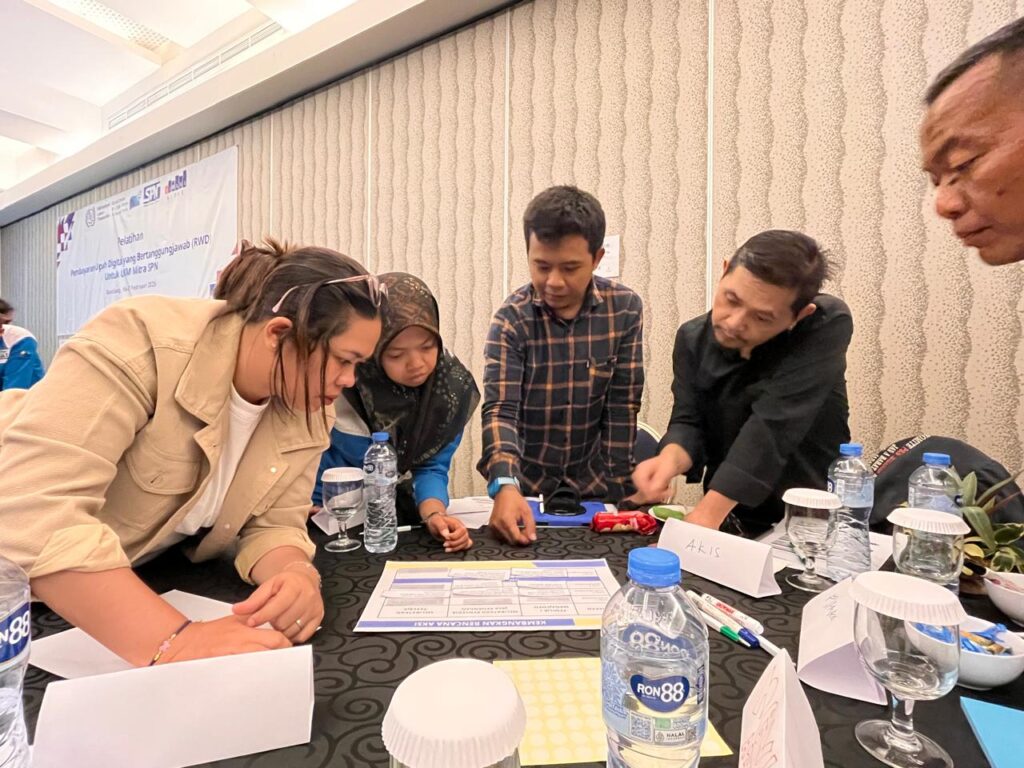
The certification training in Surabaya was organized in partnership with APINDO. Ms. Yulia Setyarini, a trainer representing APINDO in East Java, shared her thoughts on the training program:
“My involvement in the ILO Responsible Wage Digitization training is motivated by APINDO’s need to improve the capacity and capabilities of SMEs. The aim is to make SMEs in East Java sustainable. With this training, we hope SME owners will adopt digital payments, including wages, thereby enhancing their credibility.”
The Bandung training marked an important step forward, with the National Workers Union Federation (SPN) supporting the organization of the event and reaffirming its commitment to the initiative. Mr. Iwan Kusmawan, chairperson of SPN, expressed strong support for the programme’s potential reach.
“We fully support the ILO programme on digital wages, which we plan to disseminate through SPN’s partners in the textile, garment and footwear sectors. Furthermore, we would like to explore dissemination activities for the palm oil plantation sector. We hope to strengthen the collaboration between ILO and SPN to increase the knowledge of SPN partners on the topic,” stated Mr. Iwan Kusmawan.
Participant feedback from both events was overwhelmingly positive, with trainer candidates praised for their command of the material, quality of delivery and ability to respond to questions. Their performance is currently being reviewed by the ILO Global Centre and RIWANI Globe ahead of final certification.
Looking ahead, the ILO Global Centre will continue certification trainings for remaining candidates who meet the requirements while working to expand the Responsible Wage Digitization training programme as a tool to embed the topic into the capacity-building agendas of government organizations and social partners, supporting the scale-up of digital wages across various regions and sectors in Indonesia. The goal is clear: to make digital wages not the exception, but the common practice.